“New York is a place long shaped by the forces of unbridled capital, where form follows finance and landowners get to build “as of right”, citizens be damned.”
— Oliver Wainwright
Recently I read John Kendrick Bangs‘ 1912 short story collection, A Little Book of Christmas.
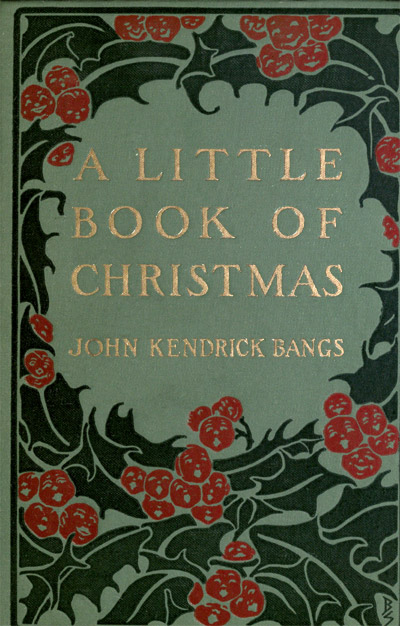 Bangs was a short story writer and magazine editor in the Gilded Age who is perhaps best known today for A Houseboat on the Styx, a comedy novel about a society of famous and infamous ghosts in the afterlife, though he also wrote two sequels to E.W. Hornung’s Raffles series, Mrs. Raffles (about Raffles’ hitherto unknown wife and her adventures in the United States) and R. Holmes & Go. (a collection of stories about Sherlock Holmes’ son and Raffles’ grandson, Raffles Holmes, in New York City).
A Little Book of Christmas is a collection of four stories and four poems with a Christmas theme. It’s a slim work — I powered through it in about an hour — and perhaps a surprising one.
I’ll leave the poetry aside, which I guess was fine but left no impression.
The four stories all, in different ways, address the collision between the very rich and the very poor in turn of the century New York.
In “The Conversion of Hetherington,” a rich man swaps places for a few hours with a street corner Santa who’s trying to make money for his children’s Christmas, and when the street corner Santa lands in the drunk tank at the police station, Hetherington (the cynical rich man) steps in.
In “The Child Who Has Everything But–,” a Christmas spirit employs a struggling writer to help a sheltered rich young boy learn how to be a boy and play with his Christmas presents.
In “Santa Claus and Little Billee,” the child of rich parents becomes lost on a busy street in Manhattan on Christmas Eve, and when he finds a man dressed as Santa Claus, a man who is employed as a walking billboard for a café, “Santa Claus” helps the boy find his way home.
And in “The House of the Seven Santas,” on Christmas Eve six men are snowed in at their club in Manhattan, and when a seventh, a doctor, comes to the club carrying a frozen newsboy he found unconscious in the street, the seven men treat the homeless boy to the best Christmas he’s ever experienced in his brief life.
There’s a whimsy to the stories, befitting Bangs’ reputation as a comic writer, but there’s also a sadness to them. The characters in the stories struggle. They live in tenements. They take demeaning jobs just to survive in a city that’s indifferent to them. Christmas is not a time of happiness and joy for characters in each story. They’re struggling to even get by in a cold and callous world, and happenstance improves their lot, at least temporarily. (“Santa Claus and Little Billee” and “The House of the Seven Santas” have the longest-term change, while the other two stories are more ambiguous in their long-term effects.) Yet, the stories of the downtrodden are more the backdrop for Bangs’ tales; his focus (excepting “The Child Who Has Everything But–“) is on the characters from the comfortable upper class worlds, and their encounters with the poor and the struggling becomes a catalyst for their growth.
Still, the book is not without its charms. “Santa Claus and Little Billee” is genuinely good and worthwhile, and “The House of the Seven Santas” closes the book on a heartwarming note. “The Conversion of Hetherington” almost feels like one of Bangs’ Raffles Holmes stories; it wouldn’t take much to rework the tale into one starring Sherlock Holmes’ ethically-challenged son. “The Child Who Has Everything But–” is the weakest of the tales; it’s well-written and charming but ultimately feels slight.
In many ways, even though it predates the song by seventy years, A Little Book of Christmas feels like a literary version of The Pogues’ “Fairytale of New York.” Scott Simon talked about the song on Weekend Edition Saturday recently, saying of the song, “It gives voice, raspy then sweet, to those may feel anxious, lost, lonely, or just left out of all the merry songs about good tidings, herald angels singing, and ho-ho-ho’s.” Nothing has changed in the forty years since the song or the century since Bangs’ story collection. Christmas, a time of joy for many, is a time of challenge and heartache for just as many. The gap between rich and poor, the comfortable and the struggling, has only grown wider and more struggle than ever before.
While Little Billee found an unexpected friend and the homeless newsboy found warmth and love on a snowy Christmas Day, they are the exception. Fiction has happy endings. Life does not. Spare a thought for those struggling against things seen and unseen this holiday season, and look for ways to bring a little light into the lives of others.
I don’t know if that’s what John Kendrick Bangs intended for readers to take away from A Little Book of Christmas, but that what I took. It’s a good message to take away. In a time of unbridled capitalism and consumption, acknowledge and embrace our shared humanity in these darkest days of the year.
“At midnight all was still as a sylvan dell in the depths of a winter’s night, when no sounds of birds, or of rustling leaves, or of babbling waters break in upon the quiet of the scene.”
— John Kendrick Bangs, “The House of the Seven Santas”
A Little Book of Christmas is available (for free!) on Project Gutenberg.